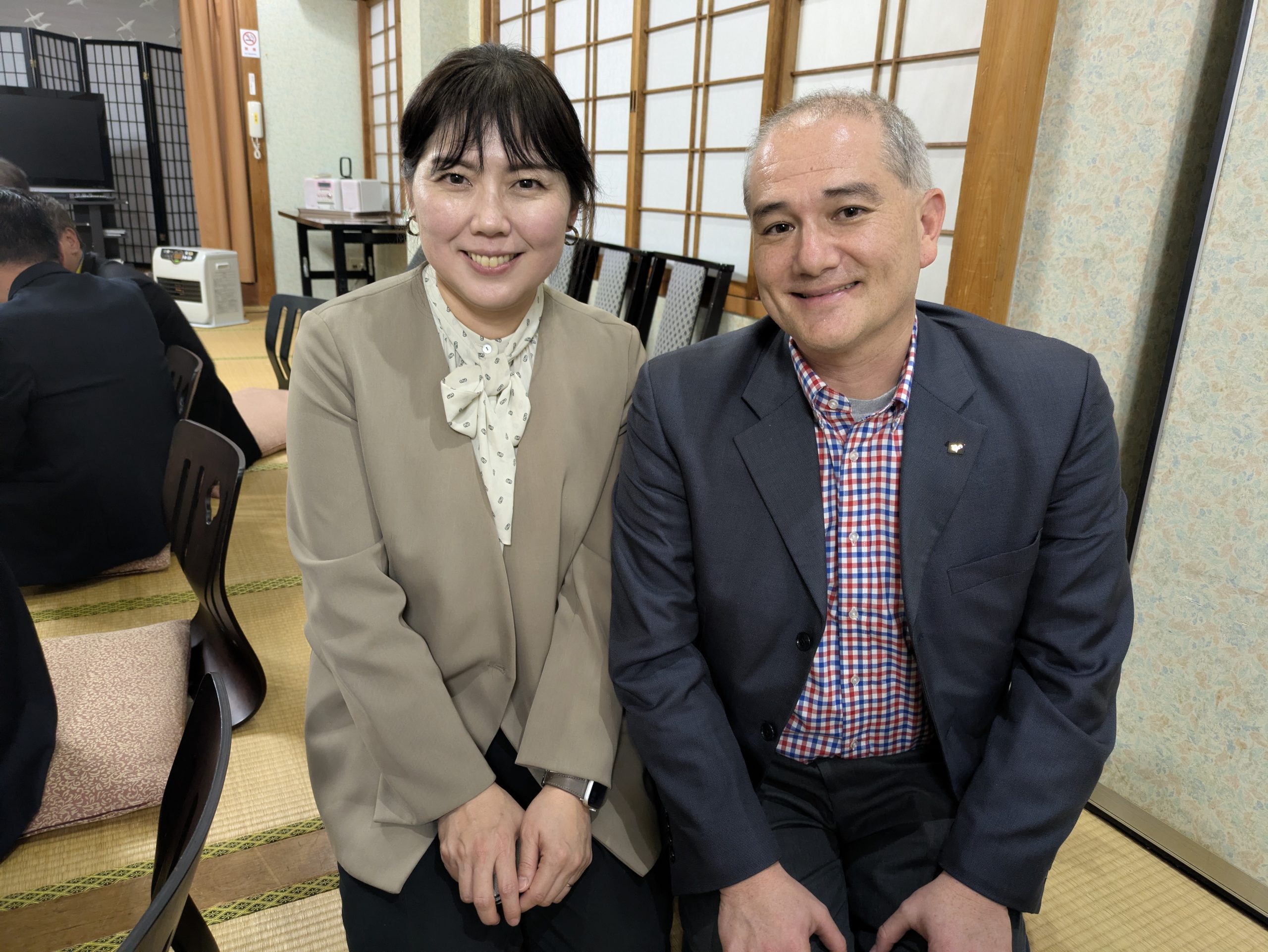
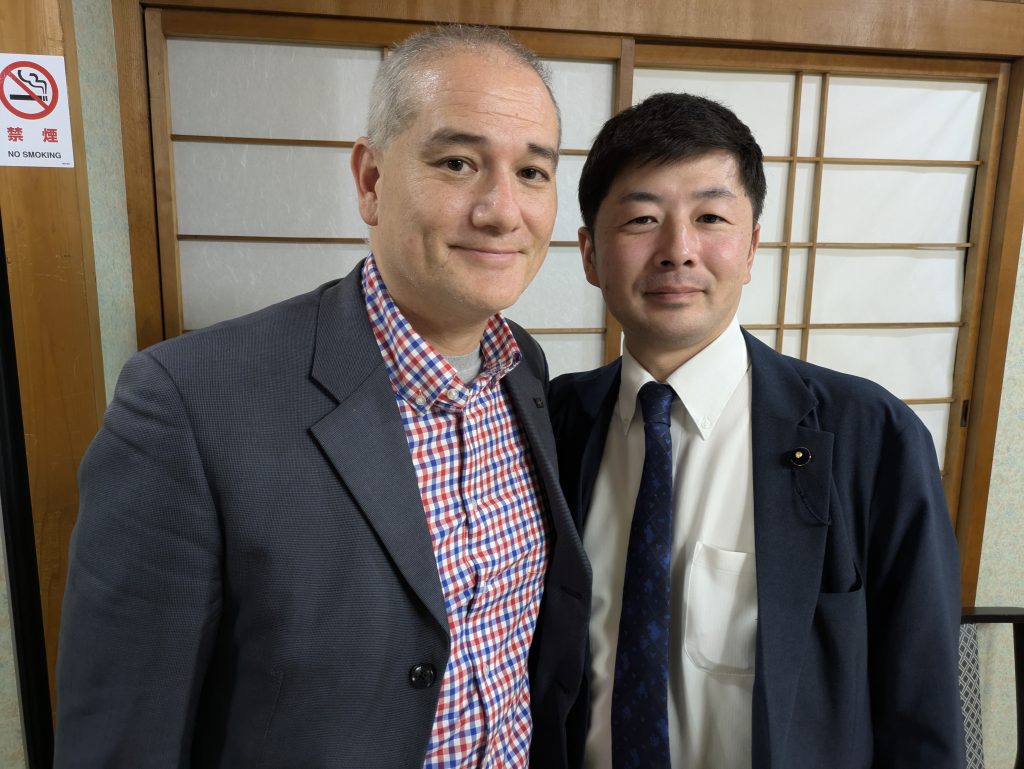
Looking toward 2026, I was inspired to engage with emerging Japanese leaders at the prefectural and municipal levels, including a Vice Governor, a Prefectural Assembly Member and son of the Prime Minister, and a Mayor, all committed to advancing U.S.–Japan relations at the grassroots level.
It allows ideas to be shared, perspectives to be challenged, and understanding to grow.
In the United States, the First Amendment protects expression and peaceful assembly. In Japan, Article 21 guarantees freedom of speech and prohibits censorship.
Different histories — shared principle.
Across cultures, the ability to speak, listen, and question is not merely legal protection; it is the foundation of resilient communities.
Societies endure not because they agree on everything, but because they allow disagreement to exist peacefully.
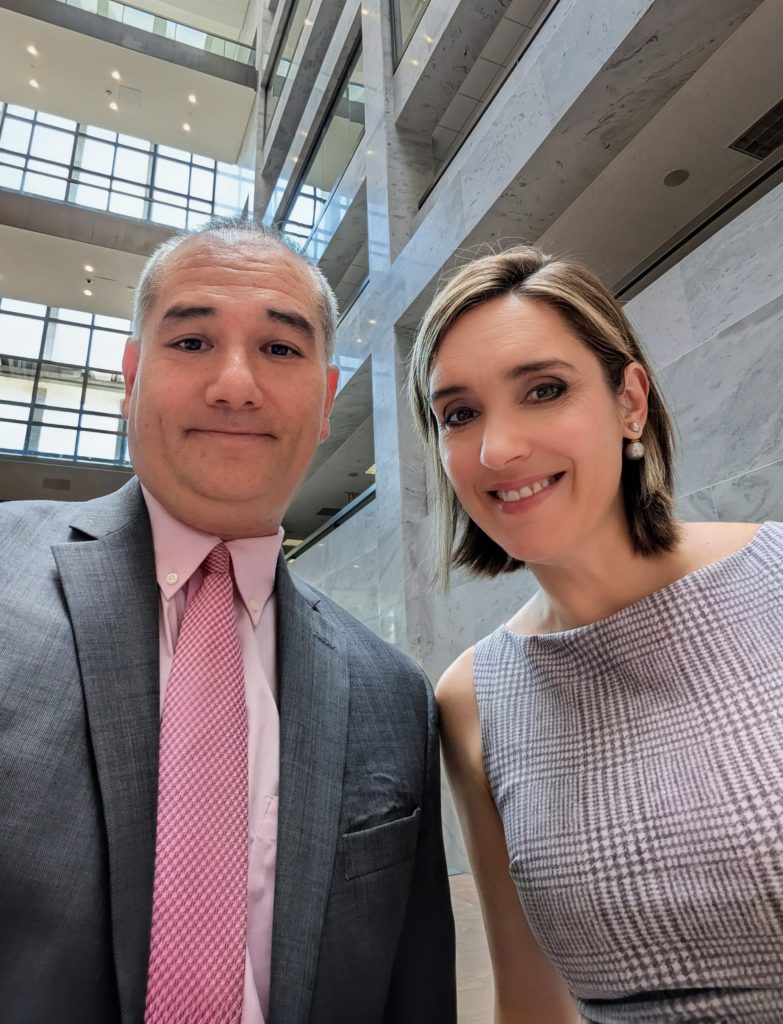
With Margaret Brennan, host of CBS Face the Nation.
I recently had the privilege of meeting Dr. Arai Takashi — a longtime China analyst, former CSIS Japan Fellow, and researcher affiliated with the Tokyo Institute of Technology — to discuss immigration policy and foreign community integration in Kanagawa Prefecture.
Japan faces a historic demographic challenge: a rapidly aging society and declining population. While automation, AI, and robotics will help mitigate labor shortages, technology alone cannot fully address workforce gaps. Immigration policy and successful integration of foreign residents will play an increasingly central role in Japan’s economic sustainability.
Dr. Arai recently participated in the Tokyo International Conference on African Development (TICAD) in Yokohama and is conducting research on Japan’s relations with the Middle East — regions that may become increasingly relevant in future migration and labor partnerships.
Our discussion reinforced a growing reality: Japan’s long-term prosperity will depend not only on innovation, but also on its openness to people.
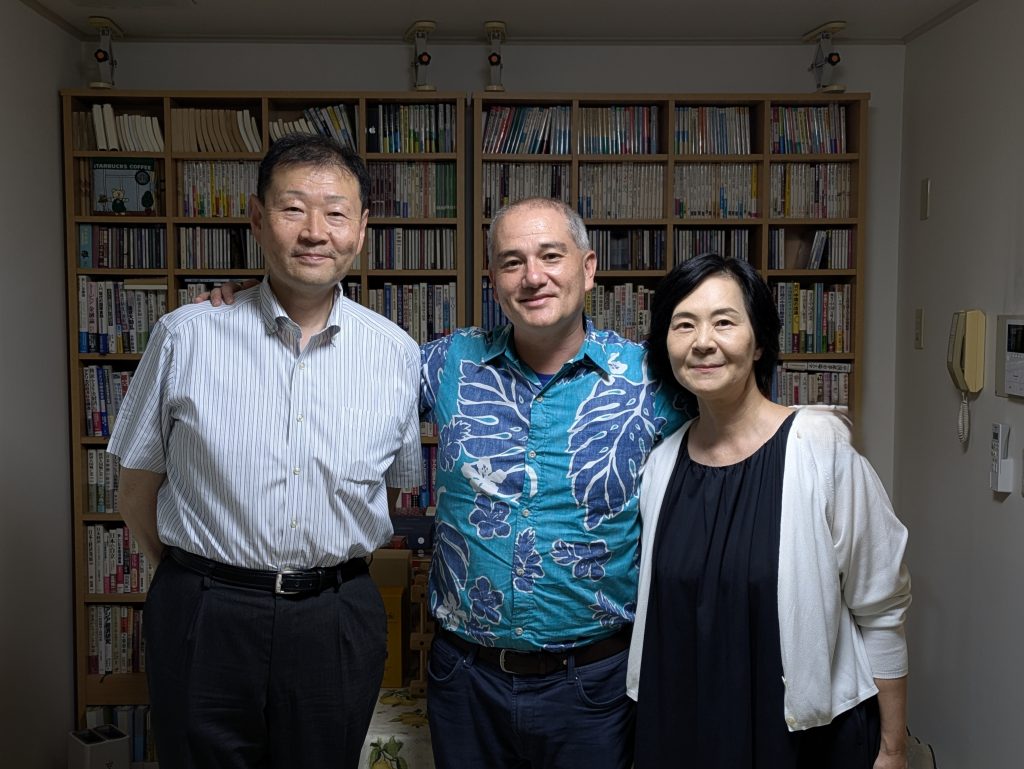
His remarkable personal library — only a fraction visible behind us — reflects decades of research dedicated to understanding global demographic change and international cooperation.
Discussing immigration, demographics, and workforce challenges in Japan with Dr. Arai Takashi.
My new book is out in Japanese and English, dedicated to my wife of 11 years. I decided what better way to honor her than to write a letter to her every weekend and publish a book in her honor in Japanese and Engish. Available for purchase here:
The title of the book is:
照れくさい手紙が嫌いな妻へ: 52通の、ありがとう
To My Wife Who Hates Embarassing Letters: 52 Letters of Thanks
After 10 years of marriage, I decided to write a letter to my wife each Saturday of the week for an entire year. This was the start of 52 letters to my wife. Each letter is composed of 11 sentences to commemorate 11 years of marriage. The letters touch upon themes of family, faith, and children. I simply wanted to express how I felt about my wife and I did not want to wait another 10 years to tell her how much I love her. I learned that a simple letter could strengthen our relationship further. I could express my feelings more intimately. It allowed her access into my heart and feel appreciated. We were able to connect each weekend as a married couple in a special way. As the busy parents of two young, energetic boys (John aged 7 and Max aged 4), we often do not have time for ourselves let alone each other. My Saturday morning letter writing ritual gave me an opportunity to express my gratitude and carve out a space to let the person who has been by my side through ups and downs know how special she is to me. I am truly blessed to have a loving wife and friend and confidant. Sending you 52 letters with love.
Dual citizens bring nations closer. I argue this in my book LoveBothKeepBoth: Passport to Peace, Prosperity and Strengthened Diplomacy. Tom Hanks and Rita Wilson agree. The couple officially became dual citizens this week by obtaining Greek citizenship. Congratulations!
Using this occasion to share one of my favorite Tom Hank’s quotes: “If it wasn’t hard, everyone would do it. It’s the hard that makes it great.”
Prejudice against dual nationality is a stance against value pluralism. Yet, value pluralism is an essential need for the long-term stability of an open democratic society.
Pressuring or forcing dual nationals to renounce one of their citizenships communicates that love of country must equate to love of the country’s government – as opposed to communicating government’s duty to earn the love of its citizens.
Pressuring or forcing dual nationals to renounce one of their citizenships is analogous to creating a brick-less Berlin Wall. It locks in the citizen by making defection more difficult such that poor governance need not result in loss of subjects.
For as long as man has kept written history, leaders have recognized that dual nationality is a tool to keep the peace. Emperors and kings frequently married the offspring of rulers from other nations thereby creating a dual national in their spouse while encouraging peace and cooperation between the nations.
The origins of prejudice against dual nationality stem from war and the desire for certainty regarding who can be trusted when lives are at stake. If that is true, there seems to be little if any need for such prejudice in times of peace. Keeping that prejudice in play during times of peace communicates a perceived need for preparedness in case of future war. The deep symbiotic relationship between the U.S. and Japan has, long since, outgrown the need for such preparedness. So, keeping it in play is dishonorable.
Search
Ken Reiman is a diplomat, author, and global affairs speaker whose work reflects faith, leadership, and lived international experience.