Amid market swings outdoor swings offer a different breath of richness. Both can be thrilling. But only one is God’s playground where the soul forgets gravity, and joy returns to its purest, wind swept form.


Amid market swings outdoor swings offer a different breath of richness. Both can be thrilling. But only one is God’s playground where the soul forgets gravity, and joy returns to its purest, wind swept form.
Thank you, Senator Kelly, for your steadfast support of Arizonans, for recognizing the vital contributions of federal employees—both Foreign Service Officers and Civil Servants—in safeguarding our nation, and for your continued dedication to public service.
ケリー上院議員に心より感謝申し上げます。アリゾナ州民への揺るぎないご支援、米国外交官および公務員による国家安全保障への重要な貢献をご認識いただき、さらに公共サービスへの継続的なご尽力に、深く敬意を表します。今後とも宜しくお願い致します。

Georgetown’s neuroscience department is conducting innovative research to measure brain waves in an effort to develop a low-cost sports-style headband for everyday home use to identify sleep problems and potentially enable early Alzheimer’s detection technology. Most home sleep monitoring devices rely on body movement, which cannot distinguish between sleep stages such as light and deep sleep. By measuring brain wave activity directly, this approach represents a meaningful advancement in home-based monitoring. Unlike traditional sleep trackers, this brain wave device may help transform early Alzheimer’s detection technology, offering a non-invasive, comfortable, and user-friendly alternative to more cumbersome methods. Dr. Wu hopes the device will reach the market within 15 years — though many of us participating in the study are optimistic it could arrive sooner. It is far easier to use than a CPAP and holds promise as a more efficient and accessible tool in the future of early Alzheimer’s detection technology.

Empowering women with disabilities is an important part of building stronger and more inclusive communities.
I was honored to meet Abigail Bachman, Miss Nevada 2025, who holds a doctorate in Occupational Therapy and serves as Executive Director of a nonprofit supporting women and girls with disabilities across Nevada. Thanks to her Dad, a retired AFRICOM official, for taking the photo.
Her work focuses on confidence, independence, and opportunity for young people navigating physical and developmental challenges. Advocacy and community leadership help ensure individuals are recognized for their abilities and potential.
Best wishes to Abigail as she prepares for the Miss America Organization 2026 competition in Orlando, Florida.

A son took his father to a restaurant to enjoy a delicious dinner. His father was quite old and therefore a little weak too.
While eating, food occasionally fell on his shirt and pants. The other guests watched the old man with their faces contorted in disgust, but his son remained calm.
After they both finished eating, the son, quietly helped his father and took him to the toilet. Cleaned food scraps from his crumpled face, and attempted to wash food stains from his clothes; graciously combed his gray hair and finally put on his glasses.
As he left the bathroom, a deep silence reigned in the restaurant. The son was ready to foot the bill, but before leaving, a man, also old, got up and asked the old man’s son: ‘Don’t you think you left something here ? ‘
The young man replied: ‘No, I did not leave anything.’ Then the stranger said to him: ‘You left a lesson here for every son, and a hope for every father! ”The whole restaurant was so quiet, you could hear a pin drop.
One of the greatest honors that exists, is being able to take care of those who have taken care of us too. Our parents and all those elders who sacrificed their lives, with all their time, money and effort for us, deserve our utmost respect.
Thank you Raye Zaragoza for performing live at the Kennedy Center. It was an honor for us to hear and celebrate your work!

While the 2021 Olympics in Tokyo are over, the memories last a lifetime. Here with Japan’s Olympic Archery team watching a baseball game during the 2008 Olympics in Beijing. Congratulations to Takaharu Furukawa for winning Olympic Bronze in the 2021 men’s individual archery competition!

Honored to be featured in a podcast interview here: Ken Reiman – Mantra Media (mantrahq.com) where I discuss leadership, Asian American Heritage Month, the role of mothers and parents, and my book. My journey is not possible without the love, kindness, and sacrifice of my parents and grandparents. For them, my sons, and the future, my book and podcast interview are dedicated. Listen to the podcast and let me know your thoughts.

I created my first NFT today, a small but meaningful milestone, and I could not think of a better moment to do it than right before May 7. This date holds special significance for Asian American and Pacific Islander Heritage Month. On May 7, 1843, John Manjiro, the first Japanese immigrant to arrive in the United States, reached American shores on a whaling ship. His courage, resilience, and willingness to step into the unknown helped shape early Japanese American history. Honoring his journey feels especially meaningful as I take my own step into something new.
There is another John on my mind as well. My son is preparing for his first communion. Watching him grow in faith, compassion, and purpose reminds me that legacy is not only something we inherit. It is something we pass on. His name, his heart, and his journey inspire me every day.
As I created this NFT, I found myself reflecting on the values that guide us. Be the person God created you to be. Remember the poor. Stand with the voiceless. Advocate for peace. These are the principles I hope my son carries with him, and the ones I try to live by.
God knows your heart. And sometimes even something as modern as an NFT becomes a tribute to heritage, to history, to family, and to the quiet ways we honor those who came before us.

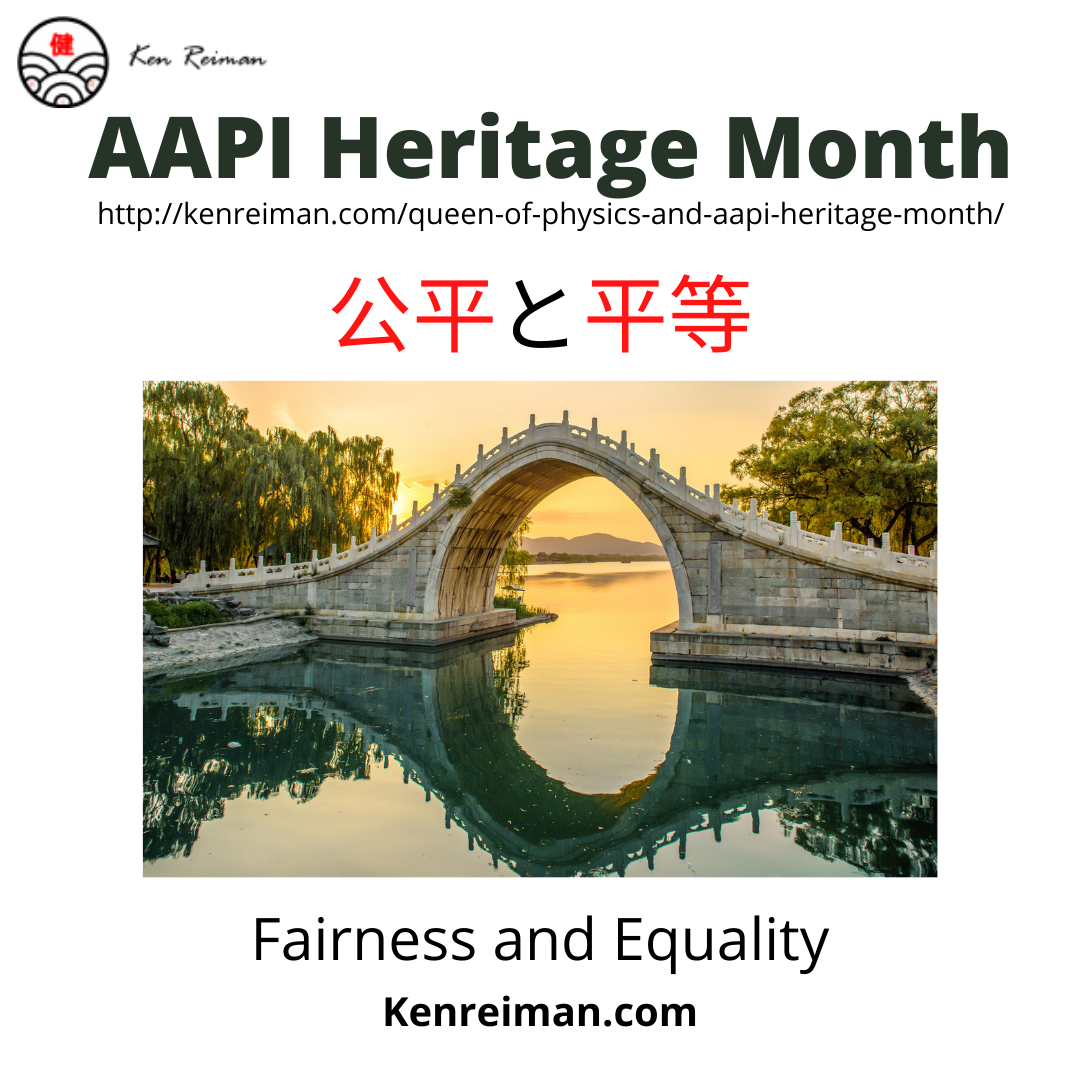
In honor of AAPI Heritage Month, I revisited the remarkable story of Wu Chien‑Shiung — a scientist whose brilliance reshaped modern physics and whose courage challenged the boundaries placed on women in science.
Often called the “Queen of Physics” and the “First Lady of Physics,” Wu Chien‑Shiung was a Chinese‑American physicist whose work fundamentally changed our understanding of the universe. Born in China, she later earned her PhD in the United States and became a U.S. citizen in 1954. Her groundbreaking experiments disproved the long‑held belief that nature does not distinguish between right and left — a principle known as parity.
Her discovery was so revolutionary that it earned her two male colleagues the 1957 Nobel Prize in Physics, while Wu herself was excluded. Despite being nominated at least seven times before 1966, she never received the Nobel Prize during her lifetime. Her omission remains one of the most widely recognized injustices in the history of the award.
Wu was acutely aware of the gender discrimination that permeated the scientific world. At an MIT Symposium in October 1964, she delivered a powerful reflection on equality:
“I wonder whether the tiny atoms and nuclei, or the mathematical symbols, or the DNA molecules have any preference for either masculine or feminine treatment.”
As a dual national of the United States and China, Wu Chien‑Shiung not only advanced physics but also fought for social justice, fairness, and gender equality. Her legacy continues to inspire generations of American and Asian women in STEM.
During AAPI Heritage Month, her words — and her example — remind us that the pursuit of knowledge is universal, and the fight for equality is ongoing.
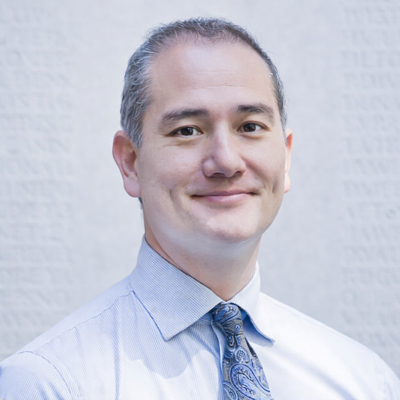
Ken Reiman is a diplomat, author, and global affairs speaker whose work reflects faith, leadership, and lived international experience.