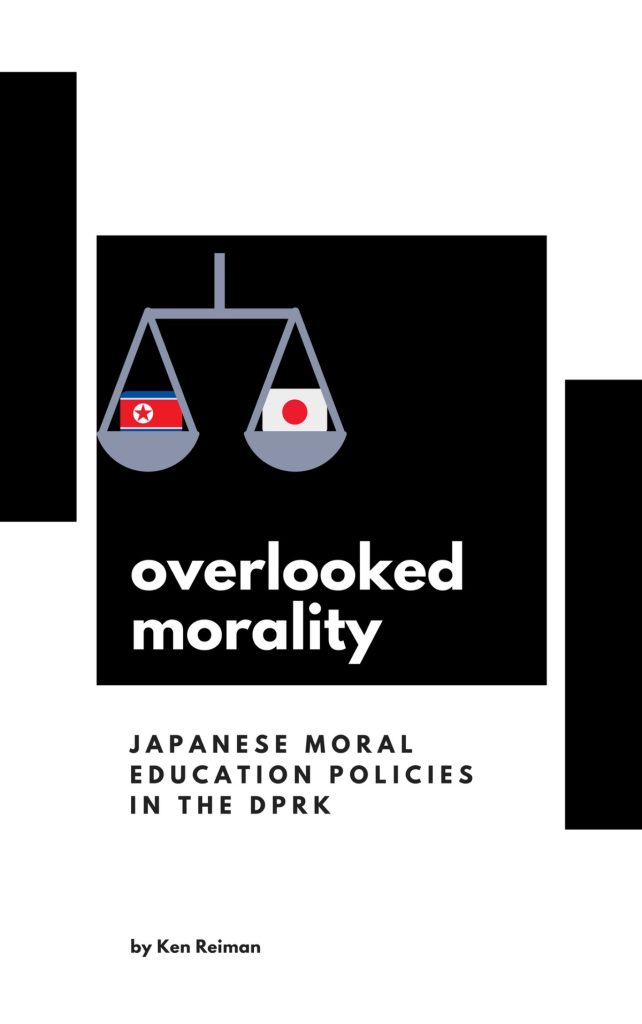
Overlooked Morality began at Stanford University, where I studied Korean language and examined the relationship between North Korea and Japan. Through analysis of North Korean textbooks and Japanese educational materials from the occupation of Korea (1910–1945), along with primary sources and expert interviews, I explored how moral education functions as a central mechanism of political legitimacy.
The study argues that the Kim regime sustains power not solely through repression, but through a moral framework rooted in adapted elements of Imperial Japanese education. By presenting its leadership in quasi-religious and moral terms, the regime has cultivated enduring loyalty despite economic hardship and international isolation.
The dissertation offers insight into the ideological foundations of North Korea’s durability and remains relevant to contemporary policy discussions.
Endorsement
“In this important and timely study, Ken shows how the North Korean regime has legitimized its rule through education. One can draw relevant policy implications for the United States.”
– Professor Gi-Wook Shin, William J. Professor of Contemporary Korea, Professor of Sociology, and Director of the Shorenstein Asia-Pacific Research Center at Stanford University.
The study is also housed in the Stanford Hoover Institution Library & Archives within the Ken Reiman Papers and Center for East Asian Studies:
Preview
Please find a snippet below:
[3d-flip-book mode=”fullscreen” urlparam=”fb3d-page” id=”237″ title=”false”]